Buy truewords.eu ?
We are moving the project
truewords.eu .
Are you interested in purchasing the domain
truewords.eu ?
domain@kv-gmbh.de · 0541-91531010
Buy truewords.eu ?
Which countries are Balkan countries?
The Balkan countries are located in the southeastern region of Europe and include Albania, Bosnia and Herzegovina, Bulgaria, Croatia, Greece, Kosovo, Montenegro, North Macedonia, Romania, Serbia, and Slovenia. These countries are characterized by their diverse cultures, histories, and landscapes, and are often considered a bridge between the East and the West. The term "Balkan" is derived from the Balkan Mountains, which run through the region. **
In which countries is there no real democracy?
There are several countries where there is no real democracy, including North Korea, China, Saudi Arabia, and Iran. In these countries, the government is either controlled by a single party or individual, and there are limited political freedoms and human rights. Citizens often have little to no say in the decision-making process, and there is little to no accountability for those in power. These countries are often characterized by authoritarian rule and lack of free and fair elections. **


Similar search terms for Countries
Top-Angebote
Products related to Countries:
-
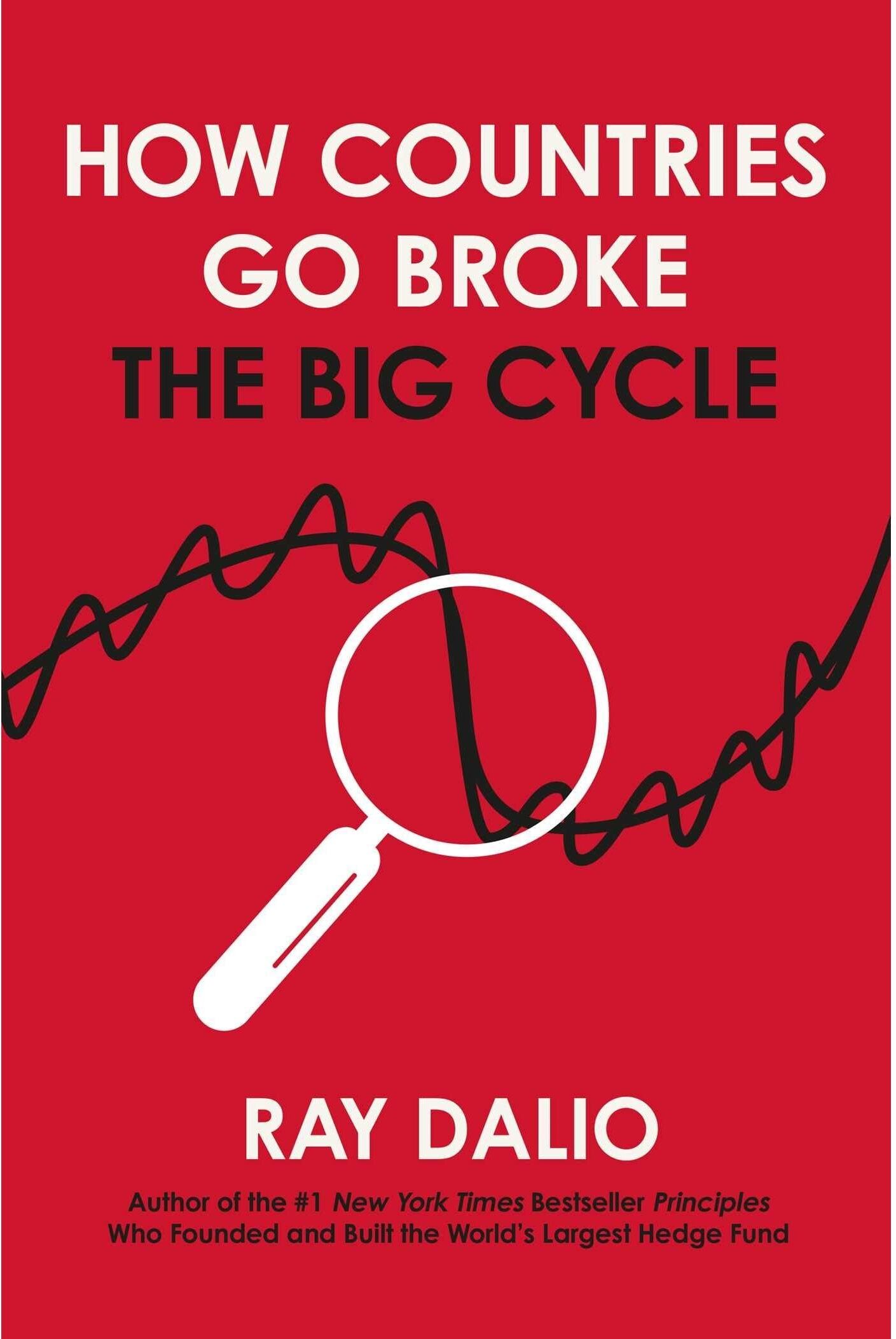
Ray Dalio , Patrick Rayne, Bruce Hood How Countries Go Broke, The One Goal, The Science of Happiness 3 Books Collection SetDescription. Condition: BRAND NEW. Format: Mixed Lot. How Countries Go Broke [Hardcover]:. In this groundbreaking book, Ray Dalio, one of the greatest investors of our time who anticipated the 2008 global financial crisis and the 2010–12 European debt crisis, shares for the first time his detailed explanation of what he calls the 'Big Debt Cycle'. Understanding this cycle is critical for helping policymakers, investors and the general public grasp where we are and where we are headed with the debt issue. Dalio's model points toward surprisingly straightforward solutions for dealing with the debt problems that the US, Europe, Japan and China face today.. The One Goal:. Do you ever feel overwhelmed by your to-do list, constantly busy but getting nowhere? The One Goal is your antidote to modern overload — a practical, no-fluff guide that shows how simplifying your focus can supercharge your success.* What You’ll Learn:✅ The Power of Singular Focus: Discover why chasing too many goals leads to burnout — and how zeroing in on one transforms your results.✅ Declutter Your Mind & Schedule: Learn how to cut out distractions, eliminate mental noise, and create space for deep work.. The Science of Happiness:. We all want to be happier, but our brains often get in the way. When we’re too stuck in our heads we obsess over our inadequacies, compare ourselves with others and fail to see the good in our lives.In The Science of Happiness, world-leading psychologist and happiness expert Bruce Hood demonstrates that the key to happiness is not self-care but connection. He presents seven simple but life-changing lessons to break negative thought patterns and re-connect with the things that really matter.. Title. How Countries Go Broke, The One Goal, The Science of Happiness 3 Books Collection Set. Delivery. Content. Reviews27,99 £*Shipping: 2,99 £Secure redirect to the provider
-
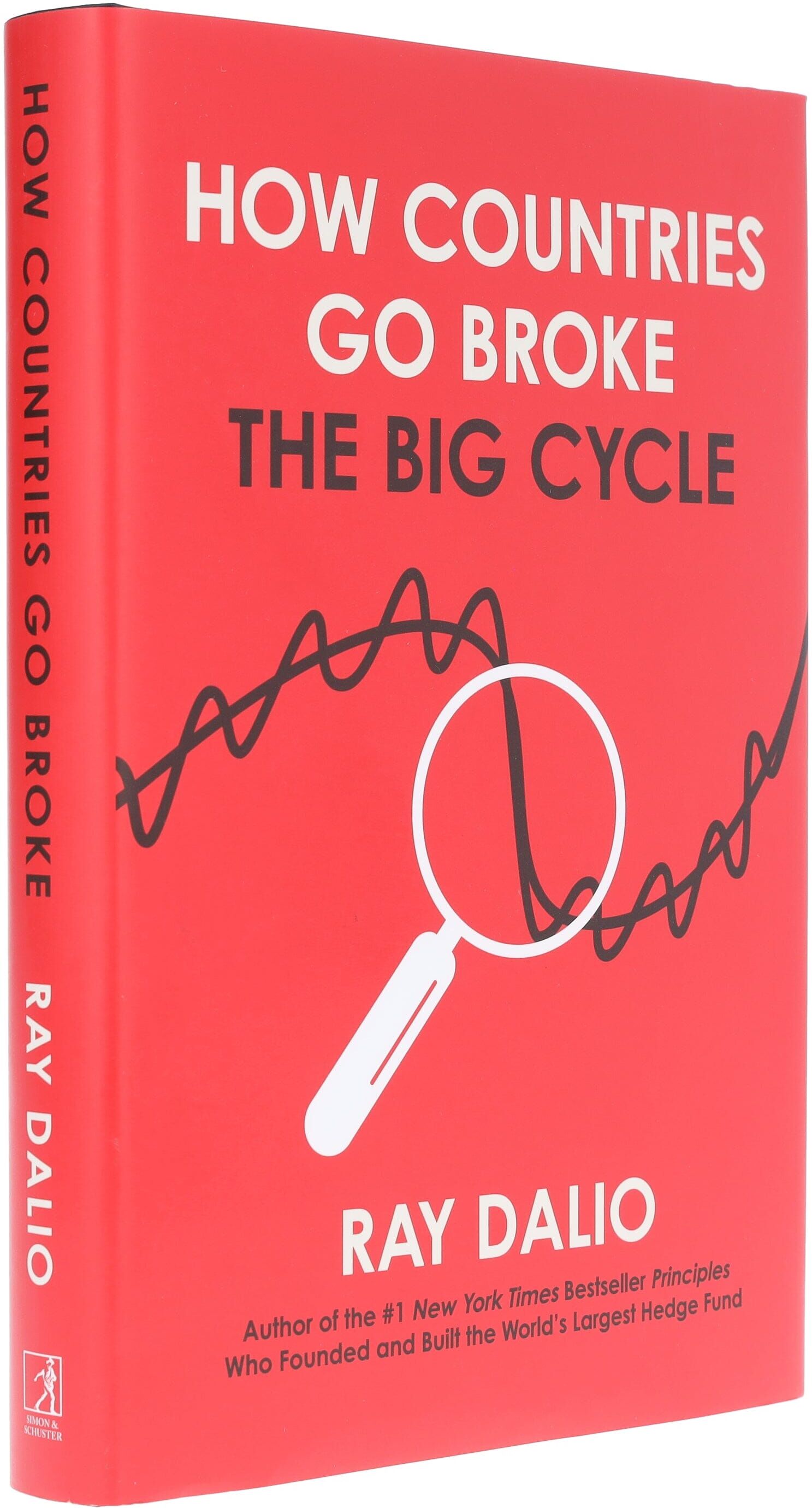
Simon and Schuster UK How Countries Go Broke: Principles for Navigating the Big Debt Cycle, Where We Are Headed, and What We Should DoAn urgent warning about the global economy from Ray Dalio, the #1 New York Times bestselling author of Principles. Do big government debts threaten our collective well-being? Are there limits to debt growth? Can a big, important reserve currency country like the United States really go broke – and what would that look like? For decades, politicians, policymakers and investors have debated these questions, but the answers have eluded them. In this groundbreaking book, Ray Dalio, one of the greatest investors of our time who anticipated the 2008 global financial crisis and the 2010–12 European debt crisis, shares for the first time his detailed explanation of what he calls the 'Big Debt Cycle'. Understanding this cycle is critical for helping policymakers, investors and the general public grasp where we are and where we are headed with the debt issue. Dalio's model points toward surprisingly straightforward solutions for dealing with the debt problems that the US, Europe, Japan and China face today. How Countries Go Broke also shows how these debt problems are related to the other forces – political within countries, geopolitical between countries, natural (droughts, floods and pandemics) and technological (most importantly, AI) – that together are causing what Dalio calls the 'Overall Big Cycle' changes in the world order. By reading this book, you will improve your understanding of what's happening now and what to do about it.17,99 £*Shipping: 2,99 £Secure redirect to the provider
-
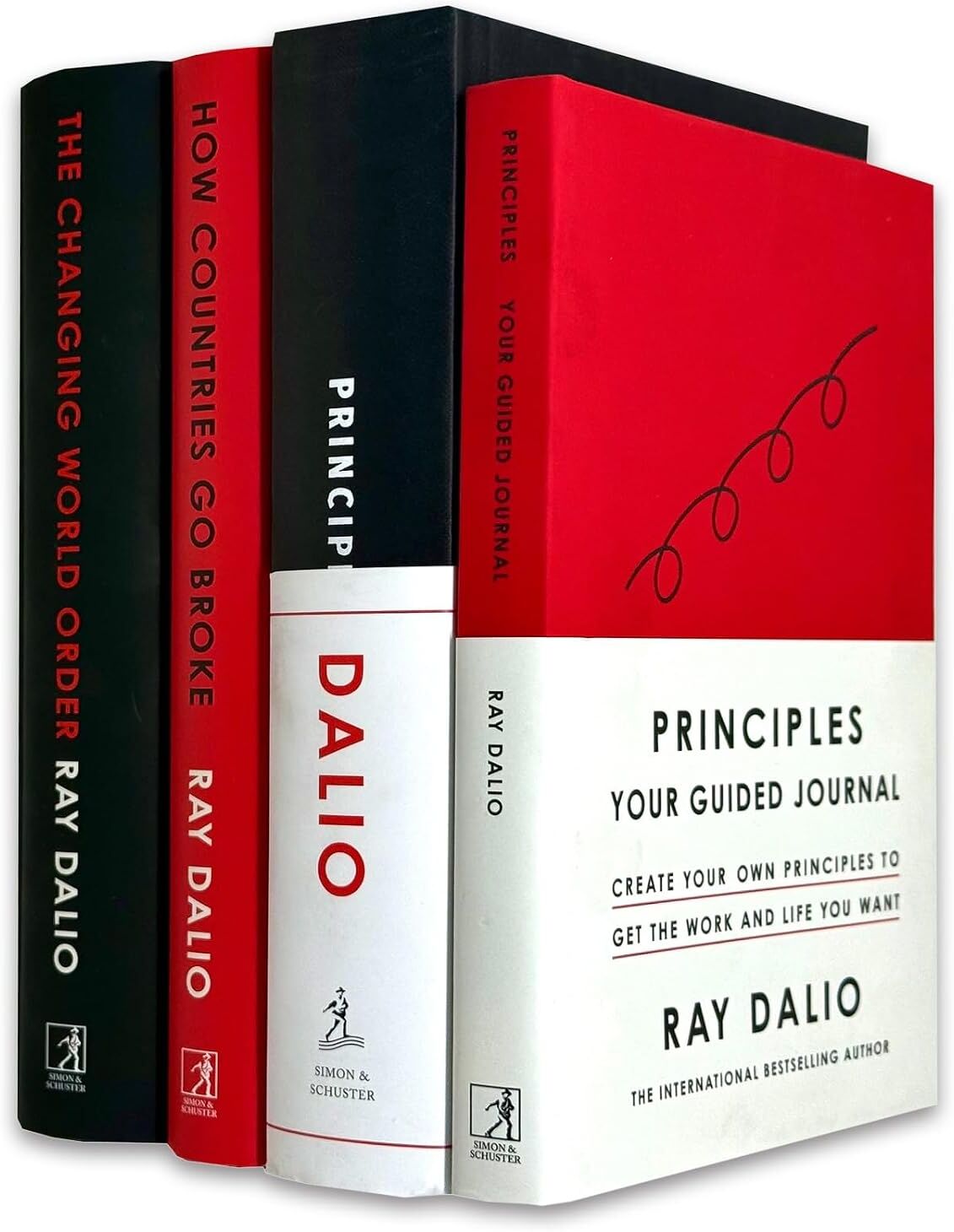
Ray Dalio Collection (Principles: Life and Work, The Changing World Order, How Countries Go Broke & Guided Journal) 4 Books Set - Non Fiction - Hardback Simon & SchusterTitles in this Set: 1. Principles: Life and Work 2. Principles for Dealing with the Changing World Order 3. How Countries Go Broke: The Big Cycle 4. Principles: Your Guided Journal Description: Principles: Life and Work In 1975, Ray Dalio founded an investment firm, Bridgewater Associates, out of his two-bedroom apartment in New York City. Forty years later, Bridgewater has made more money for its clients than any other hedge fund in history and grown into the fifth most important private company in the United States, according to Fortune magazine. Dalio himself has been named to Time magazine’s list of the 100 most influential people in the world. Along the way, Dalio discovered a set of unique principles that have led to Bridgewater’s exceptionally effective culture, which he describes as “an idea meritocracy that strives to achieve meaningful work and meaningful relationships through radical transparency.” It is these principles, and not anything special about Dalio—who grew up an ordinary kid in a middle-class Long Island neighborhood—that he believes are the reason behind his success. In Principles, Dalio shares what he’s learned over the course of his remarkable career. He argues that life, management, economics, and investing can all be systemized into rules and understood like machines. The book’s hundreds of practical lessons, which are built around his cornerstones of “radical truth” and “radical transparency,” include Dalio laying out the most effective ways for individuals and organizations to make decisions, approach challenges, and build strong teams. He also describes the innovative tools the firm uses to bring an idea meritocracy to life, such as creating “baseball cards” for all employees that distill their strengths and weaknesses, and employing computerized decision-making systems to make believability-weighted decisions. While the book brims with novel ideas for organizations and institutions, Principles also offers a clear, straightforward approach to decision-making that Dalio believes anyone can apply, no matter what they’re seeking to achieve. Principles for Dealing with the Changing World Order A few years ago, Ray Dalio noticed a confluence of political and economic conditions he hadn’t encountered before. They included huge debts and zero or near-zero interest rates that led to massive printing of money in the world’s three major reserve currencies; big political and social conflicts within countries, especially the US, due to the largest wealth, political and values disparities in more than 100 years; and the rising of a world power (China) to challenge the existing world power (US) and the existing world order. The last time that this confluence occurred was between 1930 and 1945. This realisation sent Dalio on a search for the repeating patterns and cause/effect relationships underlying all major changes in wealth and power over the last 500 years. In this remarkable and timely addition to his Principles series,...35,99 £*Shipping: 0,00 £Secure redirect to the provider
-
How Countries Go Broke Principles for Navigating the Big Debt Cycle, Where We Are Headed, and What We Should Do by Ray Dalio - Non Fiction - Hardback Simon & SchusterDo big government debts threaten our collective well-being? Are there limits to debt growth? Can a big, important reserve currency country like the United States really go broke – and what would that look like? For decades, politicians, policymakers and investors have debated these questions, but the answers have eluded them. In this groundbreaking book, Ray Dalio, one of the greatest investors of our time who anticipated the 2008 global financial crisis and the 2010–12 European debt crisis, shares for the first time his detailed explanation of what he calls the 'Big Debt Cycle'. Understanding this cycle is critical for helping policymakers, investors and the general public grasp where we are and where we are headed with the debt issue. Dalio's model points toward surprisingly straightforward solutions for dealing with the debt problems that the US, Europe, Japan and China face today. How Countries Go Broke also shows how these debt problems are related to the other forces – political within countries, geopolitical between countries, natural (droughts, floods and pandemics) and technological (most importantly, AI) – that together are causing what Dalio calls the 'Overall Big Cycle' changes in the world order. By reading this book, you will improve your understanding of what's happening now and what to do about it.15,99 £*Shipping: 2,99 £Secure redirect to the provider

-
Which Balkan countries are Islamic countries?
The Balkan countries with a significant Muslim population are Albania, Bosnia and Herzegovina, and Kosovo. These countries have a long history of Islamic influence and have a majority Muslim population. Islam has played a significant role in shaping the culture, traditions, and architecture of these countries. While other Balkan countries also have Muslim communities, these three countries are considered Islamic countries due to their majority Muslim population. **
-
What is the difference between honest and sincere?
Honesty refers to telling the truth and being straightforward in one's communication, while sincerity refers to being genuine and heartfelt in one's actions and expressions. In other words, honesty is about being truthful and transparent, while sincerity is about being genuine and authentic. One can be honest without being sincere, and vice versa. For example, someone can be honest about their feelings but not sincerely express them, or someone can sincerely express themselves but not be completely honest. **
-
What are industrialized countries and developing countries?
Industrialized countries are those that have advanced infrastructure, technology, and high levels of income and standard of living. These countries have highly developed economies and industries, and typically have a high level of urbanization and access to modern amenities. Developing countries, on the other hand, are those that are still in the process of industrialization and have lower levels of income and standard of living. These countries often have less advanced infrastructure and technology, and may have a higher proportion of their population engaged in agriculture. Developing countries are working towards improving their economic and social conditions to reach the level of industrialized countries. **
-
Neighboring countries
Neighboring countries are countries that share a common border or are geographically close to each other. These countries often have cultural, economic, and political ties due to their proximity. Neighboring countries frequently engage in trade, travel, and diplomatic relations to foster cooperation and mutual understanding. However, disputes over borders, resources, or historical conflicts can also arise between neighboring countries. **


'Neighboring countries'
Neighboring countries are countries that share a border with each other. These countries often have close geographical, cultural, and economic ties due to their proximity. Neighboring countries may have agreements in place to facilitate trade, travel, and cooperation on various issues. It is important for neighboring countries to maintain good relations in order to promote peace and stability in the region. **
European countries
European countries are nations located on the continent of Europe. There are 44 countries in Europe, each with its own unique culture, history, and language. Many European countries are members of the European Union, which promotes economic and political cooperation among its members. European countries are known for their rich cultural heritage, diverse landscapes, and high standard of living. **
Top-Angebote
Products related to Countries:
-
Regula Ysewijn Dark Rye and Honey Cake: Festival baking from the heart of the Low CountriesDescription. From the heart of the Low Countries of northwestern Europe, Belgium has long forged a distinctive culinary identity through its seasonal feasts and festivals. In this follow-up to her internationally lauded Pride and Pudding and Oats in the North, Wheat from the South, Regula Ysewijn turns her attention to the baking traditions of this unique country – the place of her birth.. Title. Dark Rye and Honey Cake: Festival baking from the heart of the Low Countries. Delivery. Content. Reviews99,99 £*Shipping: 0,00 £Secure redirect to the provider
-
Multisell Products Hub Small Automatic Cigarette Rolling Machine, Fully Automatic Household Cigarette Rolling Machine For Multiple Countries redEffortless Cigarette Rolling at Home Experience the convenience of the Fully Automatic Household Cigarette Rolling Machine. Designed for individuals who enjoy rolling their own cigarettes, this machine provides a hasslefree and efficient way to...39,97 $*Shipping: 0,00 $Secure redirect to the provider
-
Ray Dalio , Patrick Rayne, Bruce Hood How Countries Go Broke, The One Goal, The Science of Happiness 3 Books Collection SetDescription. Condition: BRAND NEW. Format: Mixed Lot. How Countries Go Broke [Hardcover]:. In this groundbreaking book, Ray Dalio, one of the greatest investors of our time who anticipated the 2008 global financial crisis and the 2010–12 European debt crisis, shares for the first time his detailed explanation of what he calls the 'Big Debt Cycle'. Understanding this cycle is critical for helping policymakers, investors and the general public grasp where we are and where we are headed with the debt issue. Dalio's model points toward surprisingly straightforward solutions for dealing with the debt problems that the US, Europe, Japan and China face today.. The One Goal:. Do you ever feel overwhelmed by your to-do list, constantly busy but getting nowhere? The One Goal is your antidote to modern overload — a practical, no-fluff guide that shows how simplifying your focus can supercharge your success.* What You’ll Learn:✅ The Power of Singular Focus: Discover why chasing too many goals leads to burnout — and how zeroing in on one transforms your results.✅ Declutter Your Mind & Schedule: Learn how to cut out distractions, eliminate mental noise, and create space for deep work.. The Science of Happiness:. We all want to be happier, but our brains often get in the way. When we’re too stuck in our heads we obsess over our inadequacies, compare ourselves with others and fail to see the good in our lives.In The Science of Happiness, world-leading psychologist and happiness expert Bruce Hood demonstrates that the key to happiness is not self-care but connection. He presents seven simple but life-changing lessons to break negative thought patterns and re-connect with the things that really matter.. Title. How Countries Go Broke, The One Goal, The Science of Happiness 3 Books Collection Set. Delivery. Content. Reviews27,99 £*Shipping: 2,99 £Secure redirect to the provider
-
Simon and Schuster UK How Countries Go Broke: Principles for Navigating the Big Debt Cycle, Where We Are Headed, and What We Should DoAn urgent warning about the global economy from Ray Dalio, the #1 New York Times bestselling author of Principles. Do big government debts threaten our collective well-being? Are there limits to debt growth? Can a big, important reserve currency country like the United States really go broke – and what would that look like? For decades, politicians, policymakers and investors have debated these questions, but the answers have eluded them. In this groundbreaking book, Ray Dalio, one of the greatest investors of our time who anticipated the 2008 global financial crisis and the 2010–12 European debt crisis, shares for the first time his detailed explanation of what he calls the 'Big Debt Cycle'. Understanding this cycle is critical for helping policymakers, investors and the general public grasp where we are and where we are headed with the debt issue. Dalio's model points toward surprisingly straightforward solutions for dealing with the debt problems that the US, Europe, Japan and China face today. How Countries Go Broke also shows how these debt problems are related to the other forces – political within countries, geopolitical between countries, natural (droughts, floods and pandemics) and technological (most importantly, AI) – that together are causing what Dalio calls the 'Overall Big Cycle' changes in the world order. By reading this book, you will improve your understanding of what's happening now and what to do about it.17,99 £*Shipping: 2,99 £Secure redirect to the provider
-
Which countries are Balkan countries?
The Balkan countries are located in the southeastern region of Europe and include Albania, Bosnia and Herzegovina, Bulgaria, Croatia, Greece, Kosovo, Montenegro, North Macedonia, Romania, Serbia, and Slovenia. These countries are characterized by their diverse cultures, histories, and landscapes, and are often considered a bridge between the East and the West. The term "Balkan" is derived from the Balkan Mountains, which run through the region. **
-
In which countries is there no real democracy?
There are several countries where there is no real democracy, including North Korea, China, Saudi Arabia, and Iran. In these countries, the government is either controlled by a single party or individual, and there are limited political freedoms and human rights. Citizens often have little to no say in the decision-making process, and there is little to no accountability for those in power. These countries are often characterized by authoritarian rule and lack of free and fair elections. **
-
Which Balkan countries are Islamic countries?
The Balkan countries with a significant Muslim population are Albania, Bosnia and Herzegovina, and Kosovo. These countries have a long history of Islamic influence and have a majority Muslim population. Islam has played a significant role in shaping the culture, traditions, and architecture of these countries. While other Balkan countries also have Muslim communities, these three countries are considered Islamic countries due to their majority Muslim population. **
-
What is the difference between honest and sincere?
Honesty refers to telling the truth and being straightforward in one's communication, while sincerity refers to being genuine and heartfelt in one's actions and expressions. In other words, honesty is about being truthful and transparent, while sincerity is about being genuine and authentic. One can be honest without being sincere, and vice versa. For example, someone can be honest about their feelings but not sincerely express them, or someone can sincerely express themselves but not be completely honest. **
Similar search terms for Countries
-
Ray Dalio Collection (Principles: Life and Work, The Changing World Order, How Countries Go Broke & Guided Journal) 4 Books Set - Non Fiction - Hardback Simon & SchusterTitles in this Set: 1. Principles: Life and Work 2. Principles for Dealing with the Changing World Order 3. How Countries Go Broke: The Big Cycle 4. Principles: Your Guided Journal Description: Principles: Life and Work In 1975, Ray Dalio founded an investment firm, Bridgewater Associates, out of his two-bedroom apartment in New York City. Forty years later, Bridgewater has made more money for its clients than any other hedge fund in history and grown into the fifth most important private company in the United States, according to Fortune magazine. Dalio himself has been named to Time magazine’s list of the 100 most influential people in the world. Along the way, Dalio discovered a set of unique principles that have led to Bridgewater’s exceptionally effective culture, which he describes as “an idea meritocracy that strives to achieve meaningful work and meaningful relationships through radical transparency.” It is these principles, and not anything special about Dalio—who grew up an ordinary kid in a middle-class Long Island neighborhood—that he believes are the reason behind his success. In Principles, Dalio shares what he’s learned over the course of his remarkable career. He argues that life, management, economics, and investing can all be systemized into rules and understood like machines. The book’s hundreds of practical lessons, which are built around his cornerstones of “radical truth” and “radical transparency,” include Dalio laying out the most effective ways for individuals and organizations to make decisions, approach challenges, and build strong teams. He also describes the innovative tools the firm uses to bring an idea meritocracy to life, such as creating “baseball cards” for all employees that distill their strengths and weaknesses, and employing computerized decision-making systems to make believability-weighted decisions. While the book brims with novel ideas for organizations and institutions, Principles also offers a clear, straightforward approach to decision-making that Dalio believes anyone can apply, no matter what they’re seeking to achieve. Principles for Dealing with the Changing World Order A few years ago, Ray Dalio noticed a confluence of political and economic conditions he hadn’t encountered before. They included huge debts and zero or near-zero interest rates that led to massive printing of money in the world’s three major reserve currencies; big political and social conflicts within countries, especially the US, due to the largest wealth, political and values disparities in more than 100 years; and the rising of a world power (China) to challenge the existing world power (US) and the existing world order. The last time that this confluence occurred was between 1930 and 1945. This realisation sent Dalio on a search for the repeating patterns and cause/effect relationships underlying all major changes in wealth and power over the last 500 years. In this remarkable and timely addition to his Principles series,...35,99 £*Shipping: 0,00 £Secure redirect to the provider
-
How Countries Go Broke Principles for Navigating the Big Debt Cycle, Where We Are Headed, and What We Should Do by Ray Dalio - Non Fiction - Hardback Simon & SchusterDo big government debts threaten our collective well-being? Are there limits to debt growth? Can a big, important reserve currency country like the United States really go broke – and what would that look like? For decades, politicians, policymakers and investors have debated these questions, but the answers have eluded them. In this groundbreaking book, Ray Dalio, one of the greatest investors of our time who anticipated the 2008 global financial crisis and the 2010–12 European debt crisis, shares for the first time his detailed explanation of what he calls the 'Big Debt Cycle'. Understanding this cycle is critical for helping policymakers, investors and the general public grasp where we are and where we are headed with the debt issue. Dalio's model points toward surprisingly straightforward solutions for dealing with the debt problems that the US, Europe, Japan and China face today. How Countries Go Broke also shows how these debt problems are related to the other forces – political within countries, geopolitical between countries, natural (droughts, floods and pandemics) and technological (most importantly, AI) – that together are causing what Dalio calls the 'Overall Big Cycle' changes in the world order. By reading this book, you will improve your understanding of what's happening now and what to do about it.15,99 £*Shipping: 2,99 £Secure redirect to the provider
-
Clare Seal Real Life Money: An Honest Guide To Taking Control Of Your Finances - Non Fiction - PaperbackTitle:. Real Life Money: An Honest Guide to Taking Control of Your Finances Condition: BRAND NEW. Format: Paperback Overview:. Real Life Money is a candid blend of memoir and practical instruction designed to help you reclaim control of your money without guilt or deprivation. The author invites you into a personal journey—from struggling with mounting debt to building a sustainable path to financial clarity—then translates those experiences into clear, actionable steps you can adapt to your own life. It covers negotiating repayment terms with creditors, setting realistic budgets that fit real life rather than idealized perfection, and cultivating resilience against money anxiety. The tone is warm, empathetic, and practical, making complex financial concepts feel accessible whether you’re a student, a new graduate, a busy parent, or someone rethinking their financial habits after a setback. The paperback format is a friendly, portable guide you’ll return to: a tactile tool for reviewing bills, planning spending cycles, and tracking progress. Readers finish with concrete actions—a personalised budget, a debt-management plan, and a calmer, more confident relationship with money—ready to start making meaningful changes today. What Makes This Book Stand Out:. This book stands out because it refuses to talk down to readers. It blends real-life anecdotes with practical frameworks, showing exactly how small, consistent steps can recalibrate a financial life. The memoir threads deepen trust, while the how-to sections offer bite-sized templates: debt repayment checklists, monthly budgeting templates, and simple money-management routines that fit unpredictable schedules. It reduces money shame by acknowledging common struggles and reframing money as a tool for choice, not a source of fear. The author’s voice—honest, non-judgmental, and encouraging—empowers readers to take ownership without feeling overwhelmed. It also speaks to today’s readers who discover relatable budgeting guidance in book clubs and on BookTok, offering discussion prompts and real-world examples that spark action rather than hesitation. Who This Book Is Perfect For:. If money feels like a constant stressor, this book is for you. It suits graduates and early-career professionals who want to build solid habits from the start, parents balancing household budgets, and anyone seeking straightforward, non-shaming personal-finance guidance. It appeals to readers who enjoy hybrid memoirs and practical self-help, those who prefer realistic budgets over fanfare, and anyone looking for a gentle but effective doorway into debt management and money mindset shifts. Whether you’re rebuilding after a setback or refining your daily money routines, Real Life Money offers a compassionate roadmap tailored to real life—compact enough to read in a weekend, scalable enough to influence long-term habits. Key Highlights:. Honest, non-judgmental approach to money and debt. Practical, step-by-step budgeting...13,97 £*Shipping: 2,99 £Secure redirect to the provider
-
Sincere Surroundings Weatherproof Porch Boards Hide PackagesA witty welcome for the home where packages are a closely guarded secret, this porch board is designed to greet every delivery driver and guest at the front door with humor and charm.42,99 $*Shipping: 0,00 $Secure redirect to the provider
-
What are industrialized countries and developing countries?
Industrialized countries are those that have advanced infrastructure, technology, and high levels of income and standard of living. These countries have highly developed economies and industries, and typically have a high level of urbanization and access to modern amenities. Developing countries, on the other hand, are those that are still in the process of industrialization and have lower levels of income and standard of living. These countries often have less advanced infrastructure and technology, and may have a higher proportion of their population engaged in agriculture. Developing countries are working towards improving their economic and social conditions to reach the level of industrialized countries. **
-
Neighboring countries
Neighboring countries are countries that share a common border or are geographically close to each other. These countries often have cultural, economic, and political ties due to their proximity. Neighboring countries frequently engage in trade, travel, and diplomatic relations to foster cooperation and mutual understanding. However, disputes over borders, resources, or historical conflicts can also arise between neighboring countries. **
-
'Neighboring countries'
Neighboring countries are countries that share a border with each other. These countries often have close geographical, cultural, and economic ties due to their proximity. Neighboring countries may have agreements in place to facilitate trade, travel, and cooperation on various issues. It is important for neighboring countries to maintain good relations in order to promote peace and stability in the region. **
-
European countries
European countries are nations located on the continent of Europe. There are 44 countries in Europe, each with its own unique culture, history, and language. Many European countries are members of the European Union, which promotes economic and political cooperation among its members. European countries are known for their rich cultural heritage, diverse landscapes, and high standard of living. **
* All prices are inclusive of VAT and, if applicable, plus shipping costs. The offer information is based on the details provided by the respective shop and is updated through automated processes. Real-time updates do not occur, so deviations can occur in individual cases. ** Note: Parts of this content were created by AI.